Source Outdoor IP67 Photovoltaic Combiner Box for Roof, Curtain Wall, Greenhouse
Compare 30 listings of outdoor IP67 photovoltaic combiner boxes designed for roof, curtain wall, and greenhouse applications. These units feature IP65 protection, DC 600V ratings, and integrated fuse holders for reliable solar system distribution.
Key considerations
Products List


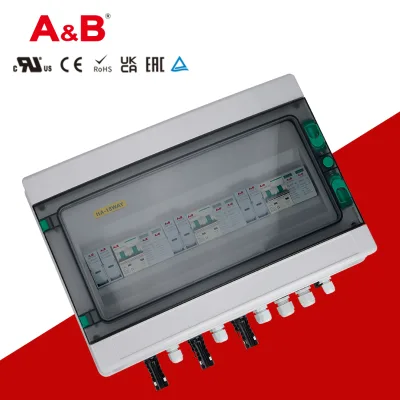


Solar PV DC Waterproof and Dustproof Combiner Box for Solar System 2 4 Strings
$39.90 - $2685.00
MOQ: 2 Pieces
Comprehensive Sourcing Guide
Strategic Sourcing Guide for Outdoor IP67 Photovoltaic Combiner Boxes
Selecting the correct Outdoor IP67 Photovoltaic Combiner Box is a critical decision for any solar procurement strategy. These enclosures serve as the central nervous system for solar arrays, managing the convergence of multiple DC strings into a single output while providing essential protection against environmental hazards and electrical faults. The market offers a diverse array of configurations, ranging from simple 1-in-1 junction boxes to complex distribution metering units with integrated surge protection. This guide synthesizes available product attributes and industry standards to help buyers navigate the technical landscape, ensuring that the selected equipment meets the rigorous demands of rooftop, curtain wall, and ground-mounted solar venues.
Technical Specifications and Configuration Analysis
When evaluating photovoltaic combiner boxes, the primary technical differentiator is the input and output configuration. The supply data indicates a variety of models available, including specific configurations such as "2 Input 2 Output" and "2 Input Strings / 1 Output." Buyers must verify the exact string count required for their specific array design. Some units are designed with a "1 Input / 1 Output" configuration, suitable for smaller residential setups, while others support higher capacities with "2 Sets" of input terminals for PV string cables and "2 Sets" of output terminals connecting to the inverter or the next stage of the system.
The electrical ratings are equally critical for system safety and performance. The observed data highlights a Rated Voltage of DC 600V as a common standard, with some advanced models supporting a Maximum System Voltage of 1000V DC. This distinction is vital for large-scale commercial projects where higher system voltages are standard to reduce transmission losses. Furthermore, the input current rating varies significantly; some units are rated for 15A per input, while others accommodate a broader range of 15A, 20A, 25A, 30A, and 32A per string. The output current rating for these distribution units can reach up to 63A, often facilitated by integrated DC MCBs or DC disconnectors with a 63A rating.
Physical dimensions and material composition also play a significant role in the selection process. The product specifications list dimensions such as 300x260x140mm, 410x285x140mm, and 215x210x98mm, depending on the model type. The box material is frequently identified as PVC, which offers a balance of durability and cost-effectiveness. However, for harsher environments, buyers should verify if alternative materials are available. The structural design is often described as "Protection" type, and the form of expression is typically "Component Type," indicating a modular approach to installation.
Environmental Protection and IP Rating Verification
The core keyword for this sourcing guide is "IP67," yet the available product data frequently cites an IP Rating of "IPType:Solar Junction Box" with specific models labeled as "IP65 Waterproof." This discrepancy requires careful attention from the procurement team. While IP65 provides protection against water jets from any direction, IP67 implies temporary immersion capabilities. Buyers must explicitly confirm if the specific unit under consideration meets the IP67 standard or if it is strictly an IP65 enclosure. The observed features list "Waterproof, Dustproof and Flame Retardant" as general attributes, but the specific IP classification must be validated against the project's environmental requirements.
Operating temperature ranges are another critical environmental factor. The data specifies an operating temperature range of -25℃ to +60℃. This range is suitable for most temperate and hot climates, but for extreme cold regions, buyers should verify if the internal components and sealing materials remain functional below -25℃. The "Feateres" (Features) list also emphasizes flame retardancy, a non-negotiable safety feature for electrical enclosures located in proximity to building structures or vegetation. The packaging is typically listed as "Carton," which is standard for shipping, but the internal sealing mechanisms must be robust enough to maintain the IP rating over the product's lifecycle.
Compliance, Certification, and Safety Standards
Navigating the certification landscape is essential for international procurement. The observed product attributes list several certifications, including CCC (China Compulsory Certification) and ISO9001:Form:All- packaged Type. These indicate that the manufacturer adheres to specific quality management systems and product safety standards within China. Additionally, CE certification is mentioned, which is a mandatory requirement for selling electrical equipment in the European Economic Area. Buyers should verify that the CE marking is valid for the specific voltage and current ratings of the combiner box.
The HS Code Number 853669000 is a crucial identifier for customs clearance and tariff classification. This code generally covers electrical apparatus for switching or protecting electrical circuits, ensuring that the product is categorized correctly for import duties. However, buyers must be aware that while the data mentions "UL 1741" in the low-confidence background section, this should not be treated as a confirmed attribute of the listed products without direct verification from the supplier. Relying on unconfirmed standards can lead to compliance issues in markets where UL certification is mandatory.
The Category of Test is listed as "II Grade Protection," which refers to the level of protection against electric shock. This classification implies that the equipment relies on basic insulation and supplementary protection rather than double insulation. Understanding this distinction is important for installation safety protocols. Furthermore, the SPD (Surge Protection Device) Max Operation Voltage is noted as 600V, with a Max. Discharge Current of 20ka and a Voltage Protection Level of 4.0kv. These figures are indicative of the surge protection capabilities, but buyers should request specific test reports to confirm that the SPD performance matches the claims, especially for areas prone to lightning strikes.
Cost Drivers and Pricing Structure
The pricing for photovoltaic combiner boxes varies widely, with an observed range from $9.9 to $2,685. This broad spectrum reflects the diversity in product complexity, from simple junction boxes to fully integrated distribution metering boxes with advanced protection features. The lower end of the price range likely corresponds to basic 1-in-1 models or smaller components, while the higher end encompasses larger units with higher current ratings, advanced surge protection, and complex configurations like the "GDS-PV4-2-DC1000" model.
Several factors drive these costs. First, the material composition, such as the use of PVC versus higher-grade engineering plastics or metals, influences the base price. Second, the inclusion of integrated components like fuse holders, DC MCBs, and SPDs adds significant value and cost. Third, the certification status, particularly if the product holds multiple international certifications, can increase the price due to compliance testing and quality assurance costs. The MOQ (Minimum Order Quantity) ranges from 1 to 100 units, offering flexibility for both small residential projects and large commercial installations. Buyers should note that payment conditions typically require a 30% deposit in advance and a 70% balance before shipping, which is a standard practice in the industry.
Typical Applications and Installation Context
The versatility of these combiner boxes allows them to be deployed in a wide range of applications. The product attributes explicitly list "Roof, Curtain Wall, Sun-shading Device, Greenhouse, Photovoltaic Venues" as target applications. This indicates that the units are designed to be adaptable to both building-integrated photovoltaics (BIPV) and traditional ground-mounted systems. The "Wall Mounted" installation type is a common configuration, allowing for easy access to the terminals and components.
For curtain walls and sun-shading devices, the aesthetic and compact nature of the "Component Type" form of expression is beneficial. These units often need to blend with the building architecture while providing robust electrical protection. In greenhouse applications, the ability to withstand varying humidity levels and potential chemical exposure is crucial. The "IP65" or "IP67" rating ensures that the internal components remain dry and protected from dust, which is essential for the longevity of the electrical system. The "Distribution Metering Box" type suggests that some units also incorporate metering capabilities, allowing for precise monitoring of energy generation and consumption, which is valuable for commercial and industrial solar farms.
Supplier Evaluation and Quality Control Protocols
When evaluating potential suppliers, buyers should prioritize those who can provide clear documentation regarding the product origin. The data indicates origins in "Zhejiang," "Wenzhou," and generally "China." While these are known manufacturing hubs, buyers should verify the specific factory location to assess logistics and supply chain reliability. The "Customization: Available" attribute is a significant advantage, allowing buyers to tailor the combiner box to specific project requirements, such as custom dimensions or specialized terminal configurations.
Quality control should focus on verifying the consistency of the "Feateres" (Features) such as waterproofing and flame retardancy. Buyers should request sample testing results for the IP rating, ensuring that the unit meets the claimed IP65 or IP67 standard under rigorous testing conditions. The "Structure: Protection" attribute should be validated through physical inspection of the sealing mechanisms and the robustness of the enclosure. Additionally, the "Box Material: PVC" should be inspected for quality, ensuring it is UV-resistant and capable of withstanding the specified operating temperature range of -25℃ to +60℃ without degradation.
Long-Term Procurement and Lifecycle Management
Long-term procurement considerations extend beyond the initial purchase price. Buyers should evaluate the availability of spare parts, such as fuses, breakers, and surge protection modules, to ensure that maintenance can be performed efficiently over the system's lifespan. The "Integrated Fuse Holders (DC Rated)" and "Circuit Breaker Rating" suggest that these components are replaceable, but the specific part numbers and lead times for replacements should be confirmed.
The "30% Deposit in Advance, 70% Balance Before Shippin" payment condition is standard, but buyers should negotiate terms that align with their cash flow needs, especially for large orders. The "HS Code Number 853669000" should be double-checked with local customs authorities to ensure accurate duty assessment and avoid delays. Finally, the "Standard" values, such as "12 WAY" or specific model numbers like "GDS-PV1-1-DC500," should be cross-referenced with the project's technical drawings to ensure compatibility with the rest of the solar array design. By adhering to these rigorous evaluation criteria, buyers can secure high-quality photovoltaic combiner boxes that ensure the safety, efficiency, and longevity of their solar energy systems.
FAQs
What certifications do these combiner boxes hold?
These units typically hold CCC and ISO9001 certifications, with CE marking also available for European markets. Buyers should verify specific certification validity for their target region before finalizing orders.
Which input configurations are available for solar arrays?
Available configurations include 1 input to 1 output, 2 inputs to 2 outputs, and 2 input strings to 1 output. Select the model based on the specific string count required for your photovoltaic system design.
Can these boxes operate in extreme temperatures?
Yes, the operating temperature range spans from -25°C to +60°C, suitable for most temperate and hot climates. Verify component durability if your project involves temperatures outside this specific range.
What is the maximum system voltage supported?
Most models support a rated voltage of DC 600V, while advanced units handle up to 1000V DC. Ensure the selected model matches your system voltage to prevent electrical safety hazards.
How are these units protected against environmental hazards?
The boxes feature waterproof, dustproof, and flame-retardant properties with IP65 ratings for water jet protection. Confirm if a specific IP67 rating is required for immersion scenarios before purchasing.
What is the typical minimum order quantity?
The minimum order quantity ranges from 1 to 100 units, offering flexibility for both small residential and large commercial projects. Contact suppliers directly to confirm specific MOQs for customized orders.
Which materials are used for the box construction?
The primary box material is PVC, chosen for its balance of durability and cost-effectiveness. Check if alternative materials are available if your application requires higher resistance to UV or chemical exposure.